We build in Sydney, South Coast (Wollongong) & Central Coast NSW
BlueGum Granny Flats
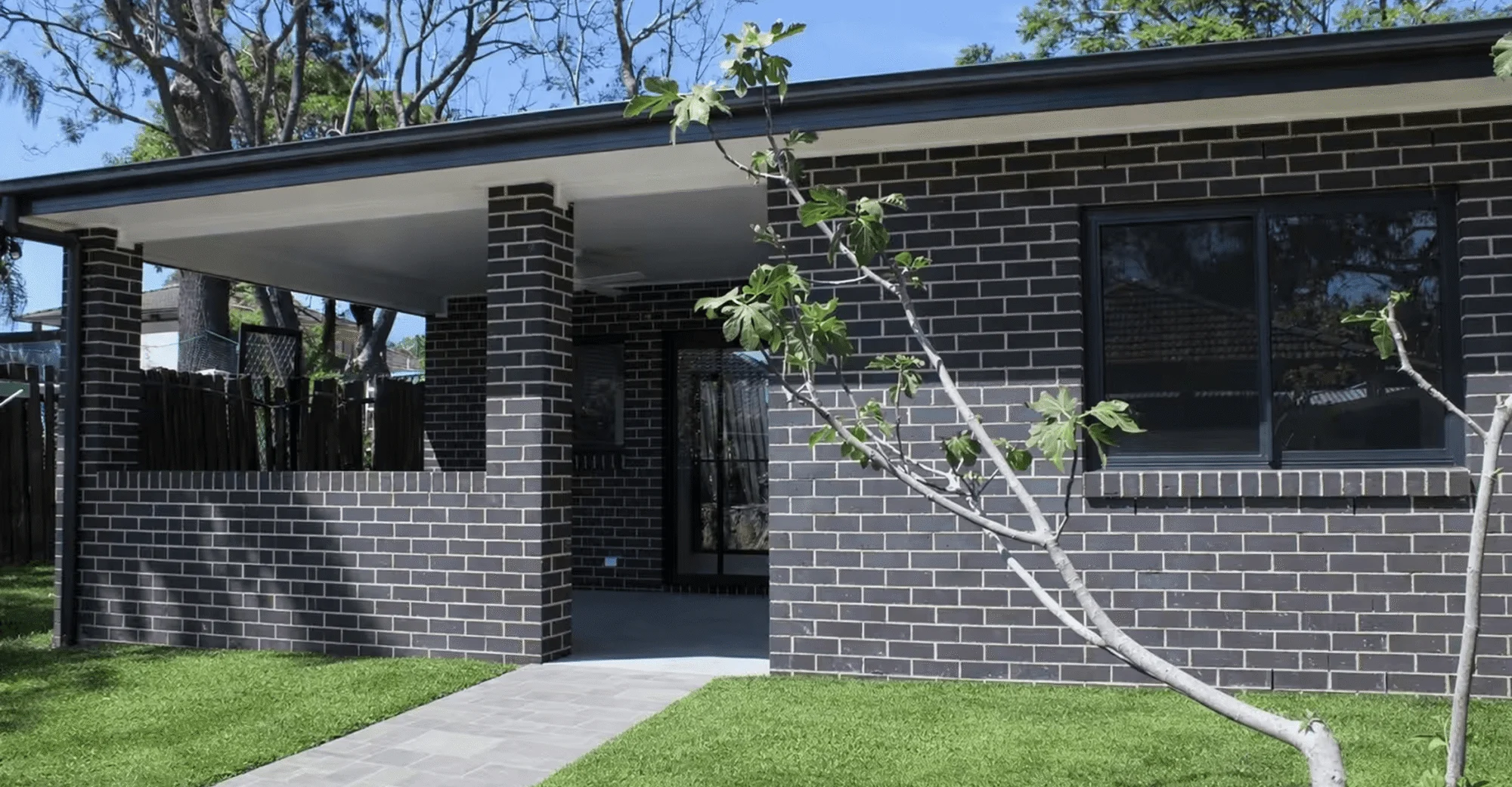
Dark brick granny flat with a covered front porch and young tree

Granny flat rules in Sutherland Shire

Sutherland Shire allows granny flats up to 60 m², the same as the rest of New South Wales, and there is no bedroom limit. The council rule most people have never heard is that Sutherland Shire asks for no car parking space for a granny flat. The catch is that the council’s controls change by zone, so your setbacks depend on where you are.

This page covers what Sutherland Shire adds on top of the state rules. Before you read any of it, work out which of the 2 approval pathways you are on, because most of the council rules below only bind you on one of them. The next section sorts that out in about a minute.
Check My Property Eligibility

Takes 60 seconds. No obligation.

Builder Licence 247388C
HIA member
In-house design & drafting team
NSW Fair Trading
Our own in-house build team
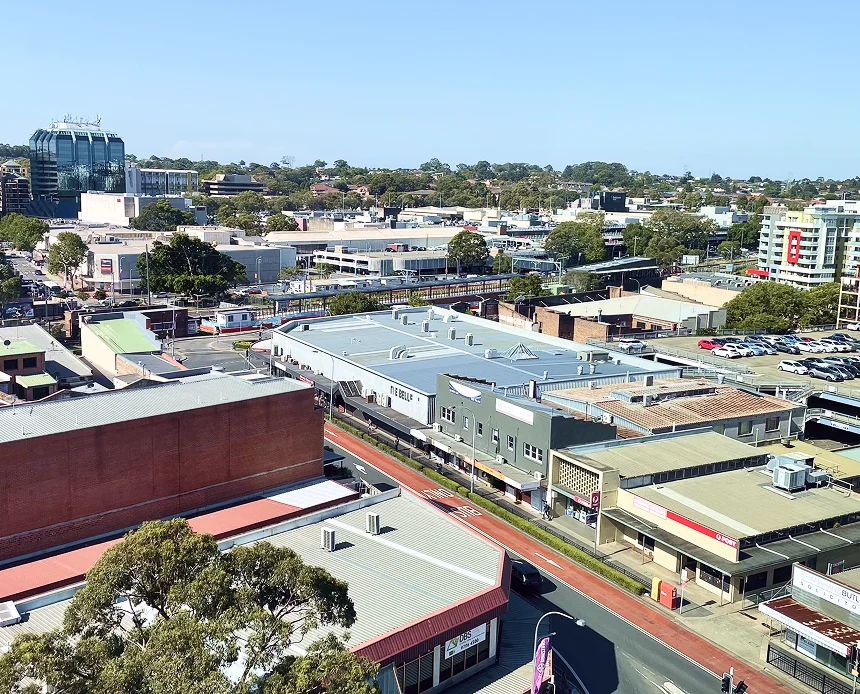
Aerial view of a Sydney suburb's shops and streets

Which suburbs this covers

The Sutherland Shire suburbs we build in most often are Caringbah, Gymea, Menai, Alfords Point, Taren Point, Loftus, Yarrawarrah and Sutherland.

None of these sit across a council boundary, so if your address is in one of them you are dealing with Sutherland Shire Council. What does change from block to block is your zone and whether your land carries an overlay such as bushfire prone land. Both of those come off your planning certificate, not off the suburb name.

First, which approval are you actually going for

This decides which of the rules below apply to you, and most granny flat pages never tell you.

About 9 out of 10 granny flats are built on the fast pathway, called complying development. A private certifier checks your plans against a fixed state checklist and issues the approval. Council is not involved in the decision.

The other 1 in 10 goes to Council as a development application, usually because something about the block fails the checklist.

The difference matters more than people realise:

Fast pathway (complying development)
Council pathway (development application)
Who decides
A private certifier
Sutherland Shire Council
What they check against
The state Housing SEPP checklist
The council’s LEP and development control plan
Does Council’s DCP apply?
No
Yes, in full
Can it be refused if you comply
No
Yes, it is assessed on merit
Typical timeframe
Weeks
Months
Developer contribution
None levied in the Shire, refundable bond instead, payable before work starts
None levied in the Shire, refundable bond instead, payable before your construction certificate

Read the DCP row again, because it is the one that catches people. The car parking rule, the zone by zone setbacks, the private open space minimum and the front yard ban further down this page all come from Sutherland Shire’s development control plan. None of it binds a private certifier. If you are on the fast pathway, a builder quoting you council DCP setbacks is quoting the wrong rulebook.

What does apply on the fast pathway is the state checklist, and that is the same in Gymea as it is in Penrith. The council specific rules on this page matter most if you end up at Council.

Two things on this page are not development control plan controls and are worth separating out: the 60 m² cap, which lands at 60 m² on either pathway, and the 2 LEP prohibitions that stop a granny flat outright in parts of the Shire. Both have their own sections below.

Check which approval your block needs

The size rule: 60 m² is the cap on both pathways

Everywhere in NSW the default cap on a granny flat is 60 m². Some councils have a clause in their own plan that lifts that on a large enough property. Sutherland Shire has such a clause, but in practice it does nothing.

OR

Clause 5.4(9) of the Sutherland Shire Local Environmental Plan 2015 allows whichever is the greater of 60 m² or 5% of the total floor area of your existing house. Five per cent only beats 60 m² once the house is larger than 1,200 m². No ordinary Shire home comes close.

Which pathway can use it. Clause 5.4(9) sits in the council’s own LEP, so it is confirmed for a development application to Council. It has not been confirmed on the fast complying development pathway for Sutherland Shire, and a private certifier may well not accept it.

For the record, an above 60 m² granny flat on the fast pathway is confirmed in only 3 council areas in NSW: Liverpool, Shellharbour, and Blacktown’s growth precincts. Sutherland Shire is not one of them. Anyone telling you otherwise about the Shire is guessing.

So the published answer for Sutherland Shire is that 60 m² is the cap on both pathways. On the fast pathway a certifier will work to 60 m². On the Council pathway clause 5.4(9) is available but only pays off above a 1,200 m² house, which is not a real Shire home. We are not going to tell you otherwise, because designing around a bigger number here would waste your money.

One more thing worth being clear on, because other websites get it wrong:

  • The 20% allowance in the older Sutherland Shire LEP 2006. It exists, at clause 74(4), but clause 59 confines it to the Heathcote Ridge site at West Menai. It does not reach ordinary Shire lots. The 2006 plan is still in force, but only on deferred matter land.
Check if your Block Qualifies

What it costs the council to say yes

No developer contribution is levied on a granny flat in Sutherland Shire. You pay a bond instead.

That is worth understanding properly, because a bond and a contribution are very different things. A developer contribution is money you hand over and do not get back. A bond is security held against damage to council infrastructure during construction, and it is refundable once the work is finished and the footpath, kerb and road out the front are signed off as undamaged.

To put that in context, here is what the same 2-bedroom granny flat attracts in developer contributions in the councils either side of the Shire:

Contribution by bedroom count

Council
Two bedroom granny flat
As at
Sutherland Shire
Nothing, bond only
August 2026
Georges River
$12,390.51
June 2026 quarter
Canterbury-Bankstown
$9,030.12
June 2026 quarter
Bayside, former Botany Bay side
roughly $12,000 to $15,000
August 2026
Bayside, former Rockdale side
Nothing
August 2026

Cross the Shire boundary and the same build can carry 12 thousand dollars of council contributions that you would not pay here.

Why this is hard to confirm from Council’s own documents. The Local Infrastructure Contributions Plan 2026, in effect from 1 July 2026, contradicts itself. Section 2.1 excludes secondary dwellings outright, while Tables 4 and 5 in the same plan still list them and assign them an occupancy rate. A superseded Developer Contributions Fact Sheet dated 30 June 2024 supports the no contribution position. The 2016 plans that used to cover this were repealed on 1 July 2026.

In practice the exclusion is what applies, which matches what we pay on Shire jobs. We are telling you where that comes from rather than pointing you at a clause, because the clause argues with itself.

What to do. Confirm the bond amount for your job with Council on 02 9710 0333 or ssc@ssc.nsw.gov.au, and ask for it in writing. Budget for the bond as a cash flow item rather than a cost, since you should get it back.

Check if your Block Qualifies

Two parts of the Shire where a granny flat is prohibited outright

These 2 are LEP clauses, not development control plan controls, so they are not part of the council pathway only material below. LEP clause 6.19 prohibits secondary dwellings in the Kurnell Peninsula Refinery Risk Area. LEP clause 6.13(3)(a) prohibits them on land in an Australian Noise Exposure Forecast contour of 25 or greater. Both are absolute bars, not merit assessments, so Council cannot consent to a granny flat on that land no matter how the plans look.

Your planning certificate will tell you if either applies. If you are on the fast pathway, have your certifier check both before you spend anything on design, because land carrying a constraint like this is exactly the sort that pushes a job off the state checklist and into Council.

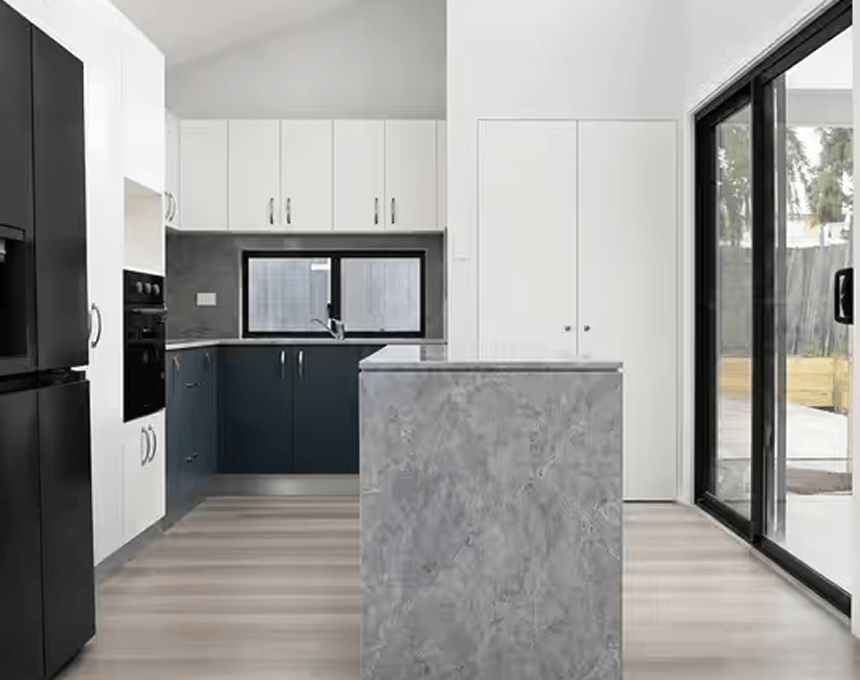
Kitchen with a grey stone island and black cabinetry
Check if your Block Qualifies

Council pathway only:
the controls that catch people out

Everything in this section comes from Sutherland Shire’s development control plan, which means it applies only if you go to Council. A private certifier issuing a complying development certificate does not apply any of it. If you are among the 9 in 10 going the fast way, read this for context rather than as your rulebook.

These controls sit alongside the state rules, not instead of them.

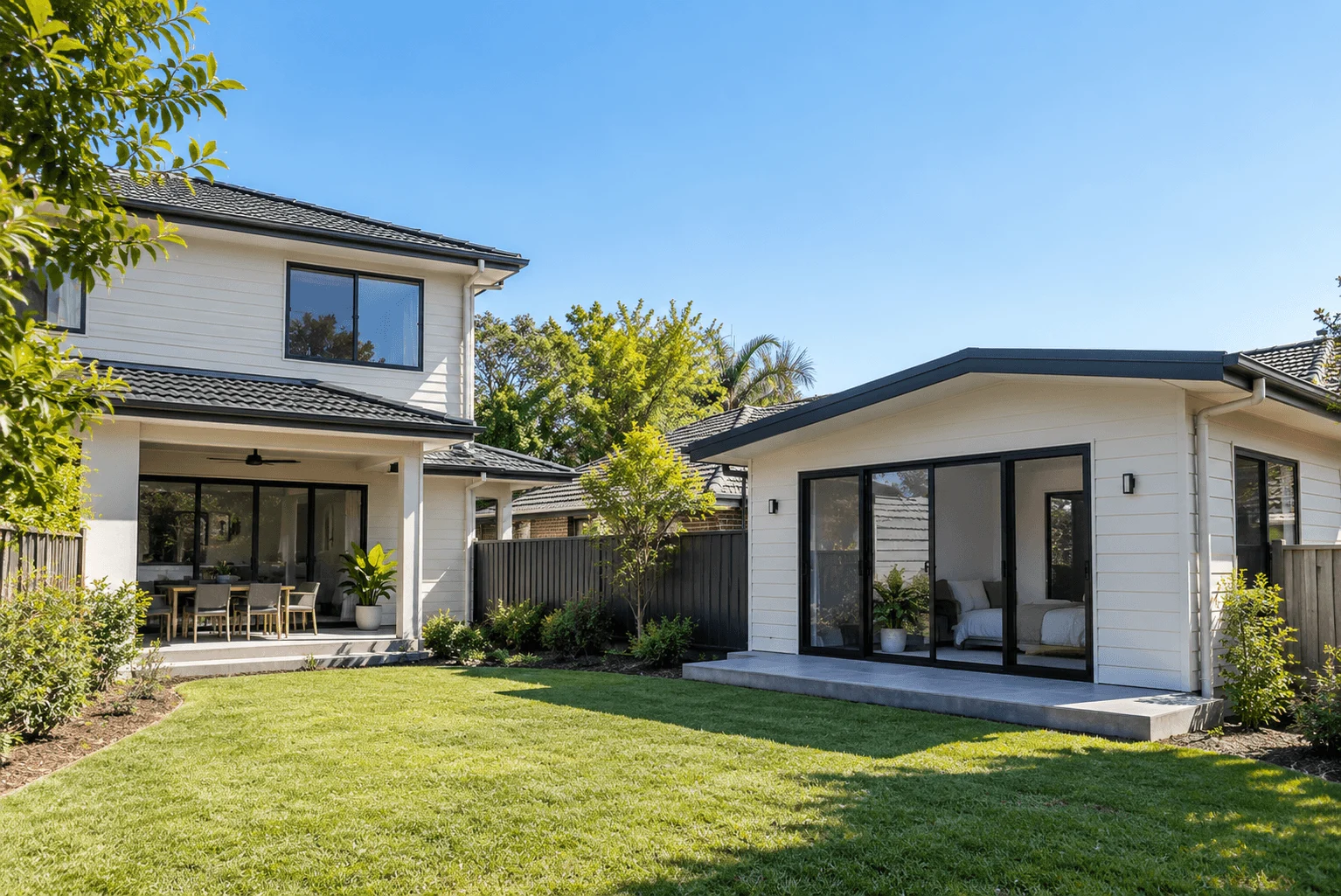
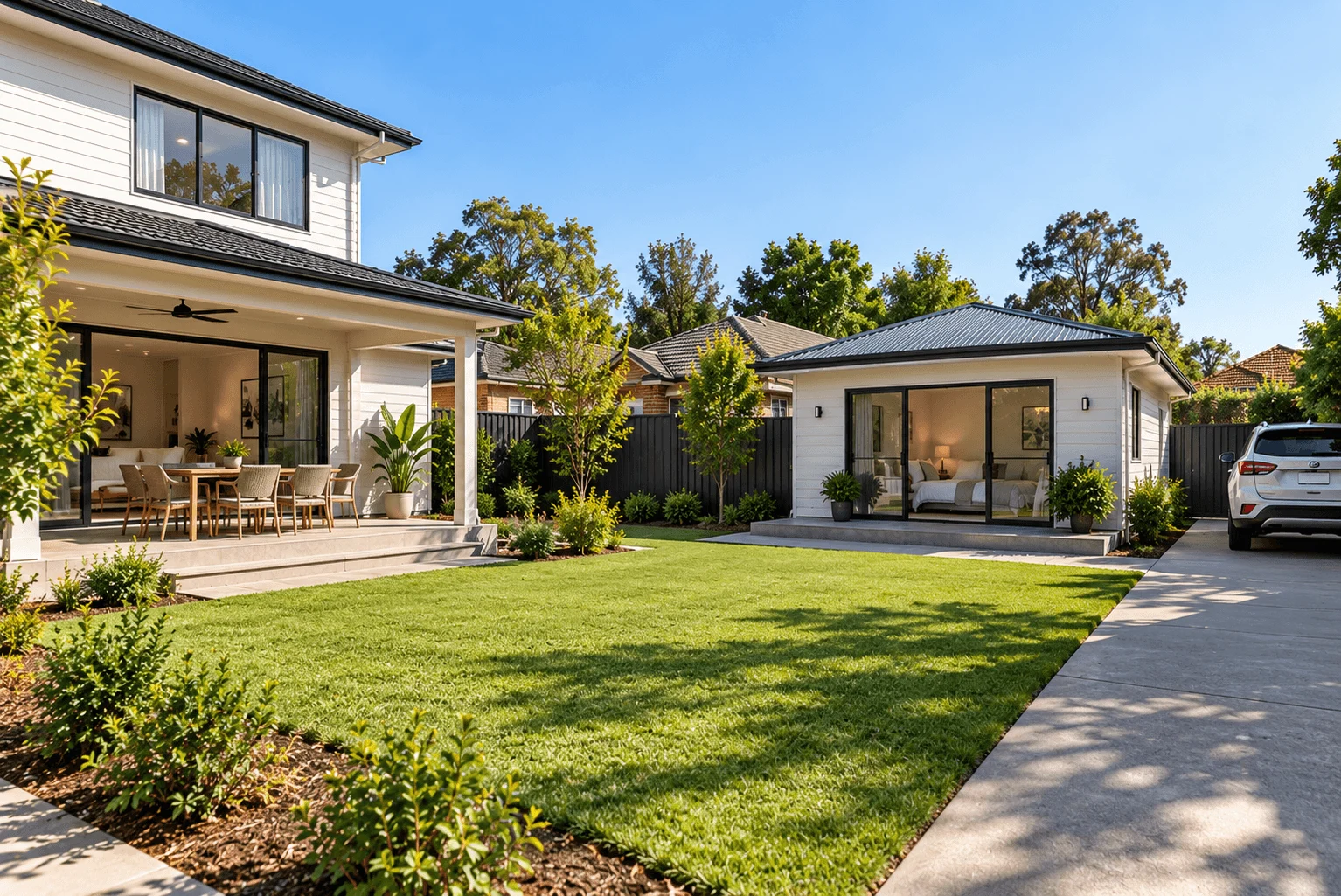
White granny flat in the backyard of a two-storey home, with a shared lawn

No car parking is required. Sutherland Shire’s development control plan states that there is no requirement for car parking for a secondary dwelling, and it says so once in each of the seven zone sections. On a tight block this is the difference between the granny flat fitting and not fitting. Most councils are not this generous.

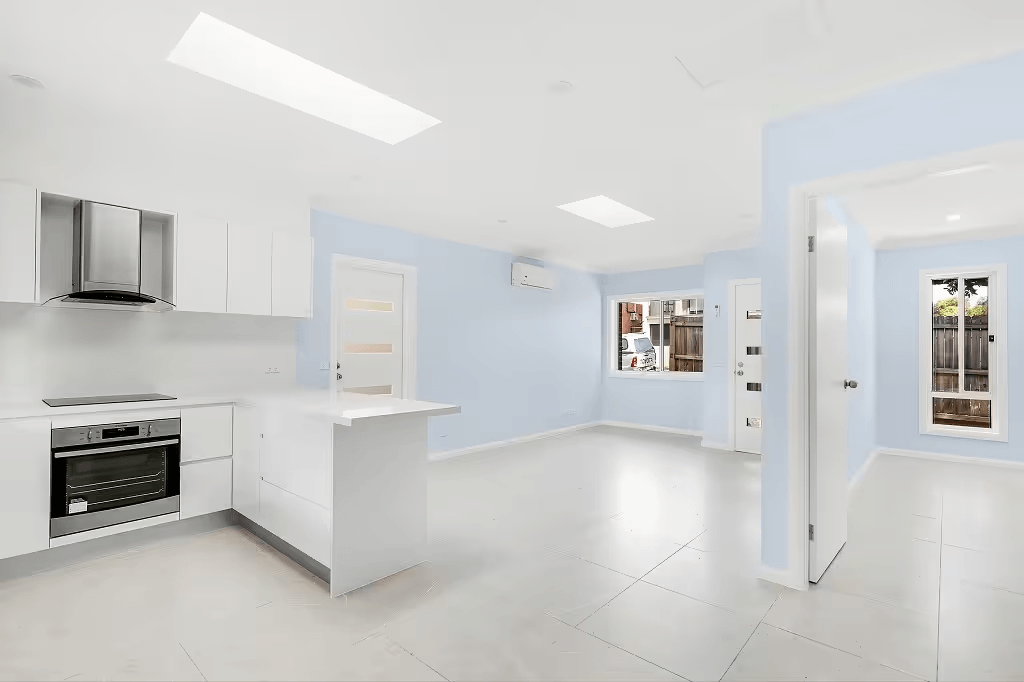
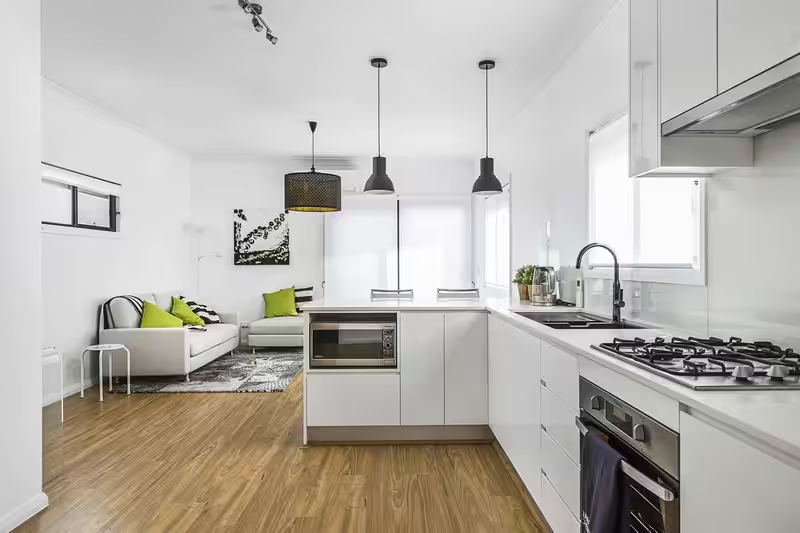
White kitchen and open living area inside a granny flat

The controls are written zone by zone. Chapter 3 of the development control plan runs 7 separate sets of controls. Setbacks and heights are not the same across the Shire, so confirm your zone before you take any number as read.

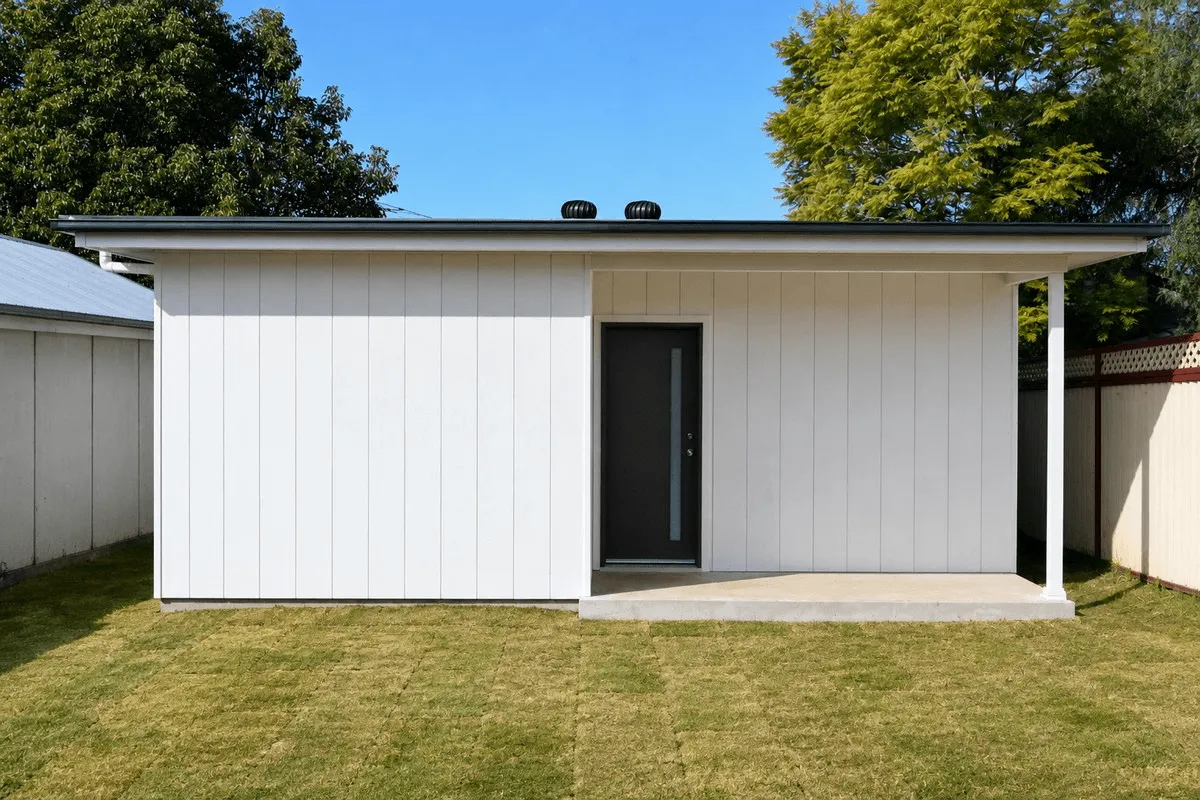
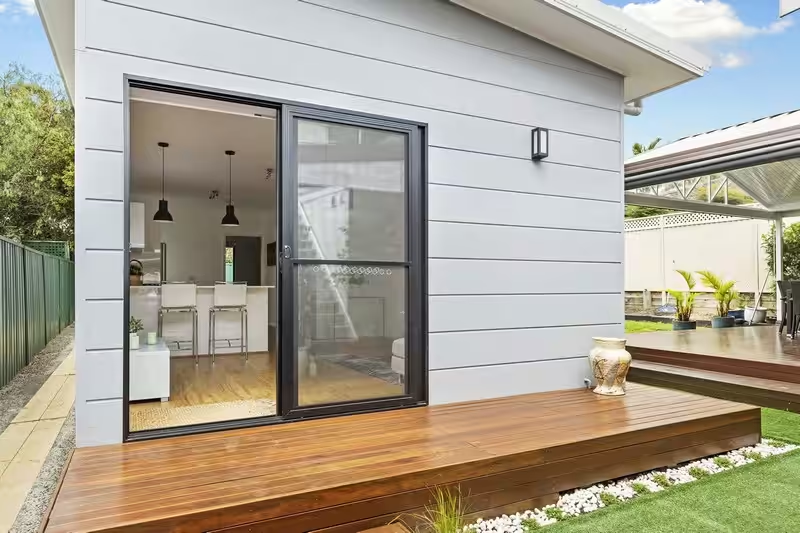
White clad granny flat with a black door on a backyard lawn

R2 setbacks, as an example of one zone. Front 7.5 m, or the established street setback if there is one. Secondary street 3 m. Side 0.9 m, increasing to 1.5 m on bushfire prone land or on an internal lot. Rear 3 m, increasing to 6 m where the secondary dwelling is more than 5.4 m high.

Backyard granny flat beside a two-storey home, with a lawn and driveway

Private open space of at least 12 m², with a minimum dimension of 4 m, directly accessible from the granny flat itself. A 12 m² strip 2 m wide does not satisfy this. It has to be a usable shape.

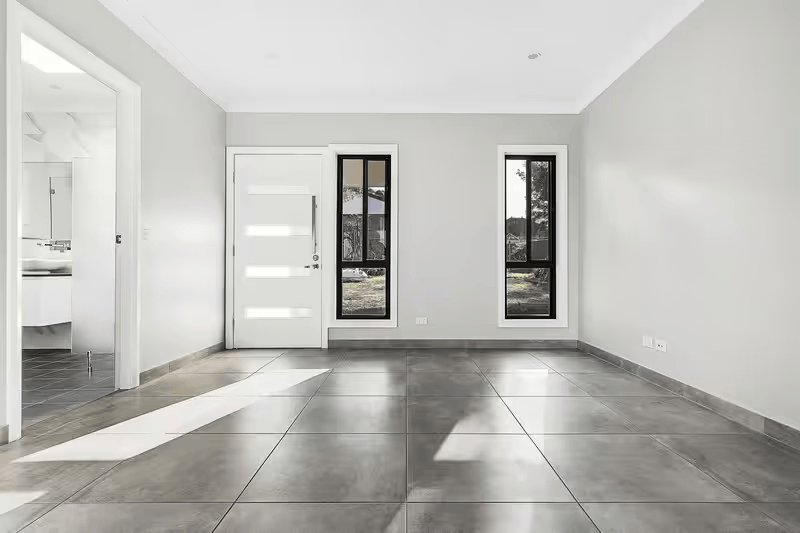
Open living area with grey floor tiles and black-framed windows

No granny flat in the front yard. The wording is that secondary dwellings must not be located in the front yard of the primary dwelling unless they form an integral part of the facade. There is an exception for waterfront land, at a 7.5 m street setback.

Check My Property Eligibility

Is there a bedroom limit?

No. We searched the full 107 pages of Chapter 3 of the development control plan. The word “bedroom” appears 28 times, and every one of those is about privacy between dwellings or about rail noise. None of them is a cap.

The same search found no floor area cap beyond the 60 m² above, no minimum lot size and no floor space ratio cap in that chapter.

Bear in mind the state rules still apply underneath. Those set the minimum lot size and the setback and landscaping tiers for the fast pathway.

Granny flats we have built in
Sutherland Shire

Three completed granny flats in this council area, in Caringbah, Loftus and Yarrawarrah.

That is a smaller number than we have in the councils closer to our Padstow office, and we would rather say so than pad the list. The 3 we have built went through the same Sutherland Shire assessment your block will, including the zone by zone setback controls above.

Check if your Block Qualifies

Frequently asked questions

Can I build a granny flat bigger than 60 m² in Sutherland Shire?

No, on either pathway. Clause 5.4(9) of the LEP allows the greater of 60 m² or 5% of your house’s floor area, and 5% only beats 60 m² on a house above 1,200 m². That clause is confirmed for a development application to Council and has not been confirmed on the fast complying development pathway here, so treat 60 m² as the cap and do not assume a private certifier will approve anything larger.

Do I need to provide a car space for a granny flat in Sutherland Shire?

On the Council pathway, no. The development control plan states in each of its 7 zone sections that there is no car parking requirement for a secondary dwelling. It is one of the genuine advantages of applying to this council rather than a neighbouring one.

That is a development control plan rule, so it is the Council pathway answer. On the fast complying development pathway a private certifier applies the state checklist instead, and no council parking control forms part of that test. Ask your certifier what the checklist requires for your block.

How much will Sutherland Shire Council charge me in contributions?

No developer contribution is levied on a granny flat in Sutherland Shire. You pay a refundable bond instead, before work starts on the fast pathway or before your construction certificate on the Council pathway. We cannot give you the bond figure, because Council does not publish one we can rely on.

Council’s own paperwork is contradictory on contributions. The Contributions Plan 2026, in effect from 1 July 2026, excludes secondary dwellings in section 2.1 but still lists them in Tables 4 and 5. Ring Council on 02 9710 0333 or email ssc@ssc.nsw.gov.au and get the bond amount in writing before you budget.

Is there a bedroom limit on granny flats in Sutherland Shire?

No, on either pathway. There is no bedroom cap anywhere in Chapter 3 of the development control plan, which is the Council pathway rulebook, and every mention of bedrooms in that chapter is about privacy or rail noise. The state checklist a certifier works to does not cap bedrooms either.

Can the granny flat go in my front yard?

This is a Council pathway question. The front yard ban is a development control plan rule, so it applies if you lodge a development application. Under it, the granny flat can only sit in the front yard if it forms an integral part of the facade of your house. Waterfront land is treated differently and works to a 7.5 m street setback. A private certifier on the fast pathway does not apply this control, and works to the state checklist setbacks instead.

Are there parts of Sutherland Shire where a granny flat is not allowed at all?

Yes, 2, and these are LEP prohibitions rather than development control plan rules. Land in the Kurnell Peninsula Refinery Risk Area is prohibited under LEP clause 6.19, and land inside an Australian Noise Exposure Forecast contour of 25 or greater is prohibited under LEP clause 6.13(3)(a). Council cannot consent to a granny flat on that land. Your planning certificate will tell you if either applies, and it is worth checking with your certifier as well as Council before you spend on design.

Still have a question?

Call 1300 060 651

Find out what your Sutherland Shire block allows

The rules above are the council layer. The state rules on lot size, setbacks, frontage and landscaped area sit underneath them, and Sutherland Shire then varies the setbacks by zone.

Working out which combination applies to your block takes your survey, your title and your planning certificate.

Building granny flats

Since 2012

Builder licence

247388C, verifiable through NSW Fair Trading

Industry body

Housing Industry Association member

MBA NSW Excellence in Housing Awards

Winner 2021, Winner 2023,
Finalist 2020

Completed granny flats documented on this site

70+

Approvals

CDC and DA, managed by
our planning team

Pricing

Quote within 1 business day of your site assessment, 2-bedroom from $134,990

Martrin Walker Constructions Pty Ltd trading as BlueGum Granny Flats is a licensed NSW builder, licence number 247388C, and a member of the Housing Industry Association. Setback, frontage and landscaping figures are drawn from the State Environmental Planning Policy (Housing) 2021 as in force in August 2026 and are general information, not planning advice. Other planning instruments applying to your land can vary them. Confirm the requirements for your block with a certifier or your council. Cost ranges are drawn from published 2026 Sydney market guides and are not a quote.
Check my block Call 1300 060 651